
Become a Licensed Clinical Mental Health Counselor in Utah: Step-by-Step Guide 2026
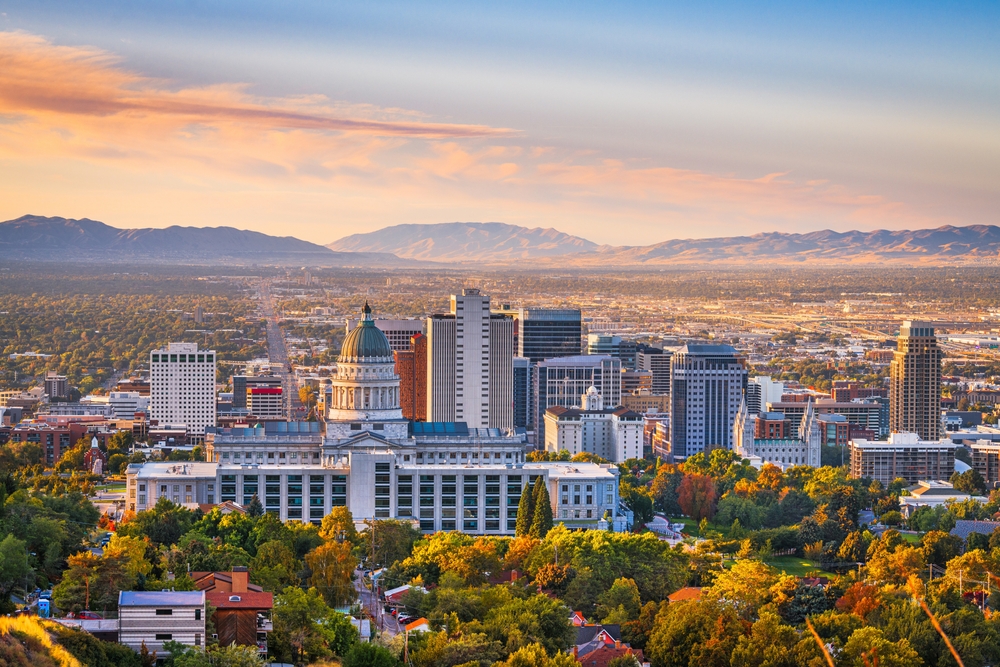
Becoming a licensed clinical mental health counselor in Utah takes at least eight years. The experience requires you to complete specific education requirements, supervised clinical work, and pass required examinations.
The path to becoming a counselor in Utah has several key stages. You must earn a qualifying graduate degree in Counseling or a related field that typically takes about two years. After graduation, you need to apply for an associate clinical mental health counselor (ACMHC) license[-4]. The next step requires 4,000 hours of supervised clinical work over at least two years. The Utah Division of Occupational and Professional Licensing handles the licensure process and charges specific fees: $85 for the CMHC application and $120 for the LCMHC application. Your license will give you access to the Counseling Compact that allows you to practice legally in multiple states.
This page guides you through each step to become a licensed clinical mental health counselor in Utah. You will learn about educational requirements, license maintenance and job opportunities.
Types of Licensure in Utah
Utah has a well-laid-out licensure system for counselors. The system includes specific credentials that mark your experience from graduate to independent practitioner. The Utah Department of Commerce’s Division of Occupational and Professional Licensing (DOPL) manages this process and provides three primary mental health counseling credentials.
Licensed Clinical Mental Health Counselor (LCMHC/CMHC)
The LCMHC is Utah’s full professional license that lets you practice independently without supervision. This credential should be your ultimate target if you want to practice mental health counseling independently across the state. You can provide clinical mental health services without oversight from another professional once you reach this status.
Associate Clinical Mental Health Counselor (ACMHC)
You must first get the ACMHC credential before full licensure. This credential serves as a supervised practice license. You can work under qualified supervision and build your post-graduate clinical hours during this intermediate step. Most practitioners hold this license for approximately 2-3 years to get the required experience. The ACMHC license connects your educational completion to full independent practice.
Associate Clinical Mental Health Counselor Extern (ACMHC Extern)
The ACMHC Extern credential has a special purpose. It helps candidates with a graduate degree complete additional coursework that meets Utah’s requirements. This temporary status usually applies to out-of-state graduates or those who need to fill educational gaps. The extern license stays valid for up to three years. This gives you time to complete up to 12 additional credit hours while getting supervised work experience.
These licenses follow a clear path. You’ll start by applying for the ACMHC license after finishing your graduate education. You’ll gather the clinical hours needed for full licensure while practicing under supervision. The LCMHC license becomes available once you complete the supervised experience requirements.
Your ACMHC license stays valid during your supervised practice period. You have one year to get your LCMHC license after finishing your supervised experience requirements. After this time, your ACMHC credential expires.
Utah offers “licensure by endorsement” for counselors already licensed in other states. This path requires you to show an active license in good standing, documented clinical counseling hours, and proof that you passed the National Clinical Mental Health Counseling Examination (NCMHCE). You must also pass a jurisprudence examination.
School counseling certification is another option in Utah’s mental health field. The Utah State Board of Education handles school counseling certification separately from clinical mental health credentials. Clinical practitioners typically focus on moving from ACMHC to LCMHC credentials.
These license types create the foundation for your career path as you work toward becoming a licensed clinical mental health counselor in Utah.
Earn Your Degree
Your clinical mental health counseling career starts with the right graduate degree. Utah requires a master’s or doctoral level education in mental health counseling or an equivalent field to get licensed.
The Utah Division of Occupational and Professional Licensing (DOPL) accepts three educational pathways:
CACREP-Accredited Programs (Preferred Option)
Programs with Council for Accreditation of Counseling and Related Educational Programs (CACREP) accreditation in Clinical Mental Health Counseling or Counselor Education and Supervision meet Utah’s educational requirements automatically. This path makes licensure easier since these programs are arranged to match state licensing standards. CACREP-accredited programs must have at least 60 semester credit hours, which students complete in about three years.
CACREP-Accredited Rehabilitation Counseling
Students can also choose a CACREP-accredited program in Rehabilitation Counseling. While this specialty focuses on helping people with disabilities, it qualifies for mental health counselor licensure in Utah when coursework matches mental health counseling standards.
CHEA-Accredited Programs
The Council for Higher Education Accreditation (CHEA) recognized programs work too if they have 60 semester hours and meet specific course requirements. Students who pick this path need to show how their courses match DOPL requirements.
Required Coursework
Your program needs these specific course areas:
- Six semester hours in helping relationships (counseling theory and practice)
- Four semester hours in mental status assessment and practicum/internship
- Two semester hours in each core area: social diversity, human development, group work, career development, substance use disorders, testing/measurement, research methods, and professional ethics
Ethics courses must follow standards from respected counseling organizations like the American Counseling Association. Students also need 34 semester hours of counseling-related courses. Thesis or dissertation work cannot exceed six hours.
Clinical Training Requirements
Clinical experience under supervision is vital. Programs must have a practicum of at least 100 hours with 40 hours of direct service and an internship of at least 600 hours with 350 hours of direct service. Some programs go beyond these minimums. The University of Utah’s Clinical Mental Health Counseling program has an 800-hour internship in the final year.
Utah Programs
Utah has several schools with qualifying degrees:
Utah State University runs a CACREP-accredited Master of Rehabilitation Counseling online. Students attend three one-week campus sessions. Their graduates achieve a 94% first-time pass rate on the Certified Rehabilitation Counselor exam.
Westminster University’s CACREP-accredited Master of Science in Clinical Mental Health Counseling takes three years and needs 61 credit hours. Students can complete their practicum and internship at more than two dozen clinical sites.
The University of Utah offers a Master of Education in Clinical Mental Health Counseling based on research and social justice. The Master’s in Psychology and Counseling Accreditation Council (MPCAC) has accredited their program through 2028.
Utah Valley University’s Master of Science in Clinical Mental Health Counseling focuses on clinical skills, ethics, and multicultural counseling. Graduates leave ready for licensure and work in various settings.
The right program choice sets the foundation for becoming a licensed clinical mental health counselor in Utah. Look at accreditation, program structure, and clinical training options before making your choice.
Get Licensed
The path to becoming a mental health counselor in Utah starts after graduation. You’ll need a license from the Division of Occupational and Professional Licensing (DOPL). This process builds on your academic foundation through several stages.
Your first step is applying for the Associate Clinical Mental Health Counselor (ACMHC) license that allows supervised practice. The application fee is $85.00. You’ll need to submit:
- Official transcripts from your qualifying graduate degree
- Proof that your program has required coursework
- Documentation of a practicum or internship with at least 700 supervised training hours (including 240 hours of direct client therapy)
DOPL might ask for National Counselor Examination (NCE) passing scores if you graduated from non-CACREP accredited programs. Utah’s requirements state that you must pass both the NCE and the National Clinical Mental Health Counseling Examination (NCMHCE).
After getting your ACMHC license, you must complete supervised work as a W-2 employee, not as a contractor. Utah requires 4,000 hours of supervised experience over at least two years. This must include 1,000 hours of mental health therapy and 100 hours under direct supervision.
Utah provides an “Exam Alternate Pathway” if you don’t pass the NCMHCE on your first try. You can qualify through additional direct client care hours, supervision, and recommendation letters.
The Licensed Clinical Mental Health Counselor (LCMHC) credential costs $120.00 to apply. You’ll need:
- Your supervisor’s verification of supervised hours
- NCMHCE passing score report
- Completion proof of a two-hour suicide prevention course
Counselors licensed in other states can get Utah licensure by endorsement. They need an active license in good standing, proof of 4,000 clinical counseling hours (with 1,000 in mental health therapy), a passed jurisprudence examination, and NCMHCE success.
Your LCMHC license needs regular renewal. Licenses expire on September 30th of even-numbered years, with a $93.00 renewal fee. You must complete 40 continuing education hours, including six hours in ethics or law and two hours in suicide prevention.
The complete experience from starting graduate education to full licensure usually takes about eight years. This timeline covers undergraduate education, graduate studies, and supervised practice.
Find Employment
Utah’s job market offers excellent prospects for new licensed clinical mental health counselors. The counseling sector shows remarkable growth, with mental health counselor positions expected to jump 56% between 2022 and 2032. The number of roles will expand from 3,780 to 5,900 statewide. This is a big deal as it means that the state’s growth outpaces the national average of 18% for the same period.
Mental health counselors in Utah can expect a median hourly wage of $30.22, which translates to about $58,022 per year. Experience plays a key role in determining pay scales. New counselors start around $34,560, while mid-career professionals earn up to $65,920. Seasoned specialists can reach $111,470 at the 90th percentile.
Several factors influence earning potential in the field:
- Geographic location: Salt Lake City metropolitan area and Park City professionals typically earn more than their rural counterparts
- Work setting: Private practice, hospitals, and specialized treatment centers often offer better compensation than community centers
- Specialization: Expertise in areas like trauma treatment or substance abuse counseling can increase earning potential
Utah offers counseling jobs in a variety of settings. New professionals often start at community mental health centers, rehabilitation programs, and nonprofits that serve vulnerable populations. Golden Behavioral Health in Ogden stands out as a notable employer, with salaries ranging from $70,000 to $100,000.
Rural and underserved areas in Utah face significant workforce shortages in mental health and substance use treatment. This creates valuable opportunities for counselors who choose to practice in these communities.
The Associate Clinical Mental Health Counselor (ACMHC) role helps speed up career growth. You can earn while gaining supervised hours needed for full licensure. Note that Utah requires these supervised hours as a W-2 employee in approved clinical settings—not as an independent contractor.
Utah’s population growth, rising mental health awareness, and expanding healthcare services create promising career opportunities for licensed clinical mental health counselors in specialties and practice settings of all types.
Remain Compliant
Your Utah LCMHC license needs regular attention to stay current. The credential expires every two years on September 30 of even-numbered years. The Utah Division of Occupational and Professional Licensing (DOPL) will send you renewal notices 60 days before expiration, so keeping your contact details updated is vital.
The license renewal process requires 40 hours of continuing education every two years. You’ll need six hours focused on ethics and law, plus two hours of suicide prevention training. Remember that only 10 hours can come from online self-study. The other 30 hours must be from live, interactive webinars or in-person training.
New counselors in their first renewal cycle get a pro-rated requirement from DOPL—about 1.6 hours per month of holding the license. You’ll pay a $93.00 renewal fee every two years.
Getting your continuing education hours is straightforward. The National Board for Certified Counselors (NBCC) and Association of Social Work Boards (ASWB) offer approved courses that Utah accepts. The Utah Mental Health Counselors Association (UMHCA) provides formal continuing education options too.
The field keeps evolving. DOPL published a Best Practices Guide for Mental Health Therapists using Artificial Intelligence. Utah’s participation in the Counseling Compact lets you practice in multiple states.
Licensed counselors must follow professional standards and avoid “unprofessional conduct” as outlined in the Utah Administrative Code. Keep client records for at least ten years, get informed consent before recording sessions, and follow the American Mental Health Counselors Association Code of Ethics.
Meeting these requirements will help you practice legally in Utah and maintain your standing in the mental health community.
Next Steps
Starting a career as a licensed clinical mental health counselor in Utah takes commitment, education, and substantial supervised experience. This piece explains the three-tiered licensure system—you begin as an ACMHC Extern or ACMHC before becoming a full LCMHC. You’ll need a qualifying graduate degree, ideally from a CACREP-accredited program that meets specific course requirements.
The path to licensing requires 4,000 supervised hours over at least two years. You’ll need to pass national exams and pay the required fees. Utah’s job market looks promising with 56% projected growth between 2022 and 2032, which is well above the national average. Your earning potential can range from $34,560 in entry-level positions to $111,470 as an experienced specialist.
You’ll need to renew your credentials every two years, complete 40 hours of continuing education, and keep up with regulatory changes. Licensed counselors in Utah get another advantage—the Counseling Compact lets you practice in multiple states without extra licenses.
The path might take time, but each step helps you build skills for this rewarding profession. With this detailed knowledge, you can move forward confidently toward becoming a licensed clinical mental health counselor in Utah. The state needs dedicated professionals like you to meet the growing need for counseling services.